


Reoviva™ Ergonomic Seat Cushion
Takes the weight off your tailbone from the first sit. Ninety days to decide.
- Sit for hours without the tailbone ache. The cut-out leaves it over open air.
- Won't go flat. Gel cells flow sideways, then back. Nothing gets crushed.
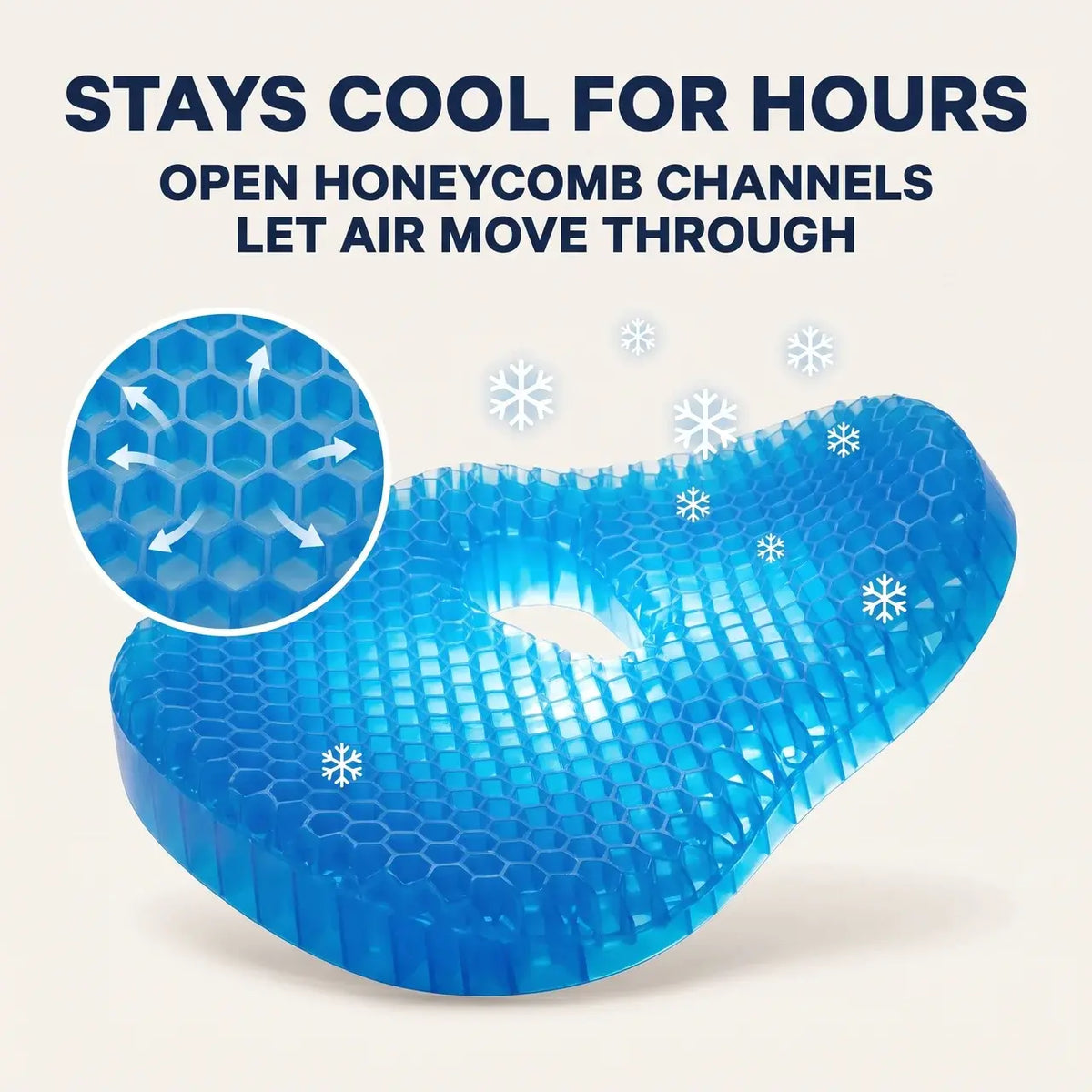
- Stays cool. Air moves through the honeycomb, no damp patch.
- One cushion, every seat. Van, desk chair, armchair, dining chair.
HOW MANY SEATS?
Couldn't load pickup availability
Size & fit
41 × 33 × 5 cm (16 × 13 × 2 in). Fits most van seats, car seats, office chairs, dining chairs and armchairs. Measure the flat part of your seat — 42 cm or wider and it sits properly.
Rated to 21 stone (136 kg). The cut-out sits at the back, under your tailbone. Five centimetres of gel under you — enough to change the hip angle without lifting you off the backrest.
What's in the box
- Reoviva™ Ergonomic Seat Cushion
- Non-slip mat, for leather and vinyl seats
- One-page setup guide: van, office chair, armchair
Delivery & returns
Dispatched in 1–2 working days, delivered in 5–8. Free UK delivery, tracked from the moment it ships.
90 days to decide. If it isn't doing what we say, send it back for a full refund. Return postage is at your own cost and the cushion needs to come back in resaleable condition.
Care
No cover, no zip, nothing to machine-wash. Wipe it with a damp cloth or rinse it under the tap, let it air-dry flat. No bleach, no tumble dryer, no radiator.

“Bought this because my desk chair is getting old and really uncomfortable. It’s quite thick so I had to lower my chair a bit, but it makes a huge difference. It doesn't just go flat after an hour like my old foam pillow did. Really happy with it.”


Any of this sound familiar?

On the road
Three hours in and the shifting starts. You brace on the door frame getting out and tell yourself it's nothing.

At the desk
By three o'clock you're sitting on one side. The ache is still there twenty minutes after you stand up.

At home
He's stopped sitting through dinner. He says he's fine. He's never once mentioned the chair.
"Use a specially designed coccyx cushion when sitting."
NHS guidance on tailbone pain · nhs.uk
That's the first thing on the list, before the ice pack and the painkillers. The cut-out is the "specially designed" part. Everything else on this page is about why the cushion around it has to be gel, not foam.
Why the last one failed
You bought soft. Soft was the problem.
Most people who tell you cushions don't work are right. Theirs didn't.
Soft feels right in the shop, and it feels right for about two weeks. Then it compresses under the same two bones every single day until the foam stops springing back, and you are sitting on a hard seat with a thin layer on top, which is the thing you spent the money to avoid.

Nothing gets crushed
Press the honeycomb and the cells flow sideways, then flow back when you stand. Nothing is being permanently squashed, so there is no dip waiting for you in three months.
Coccyx cut-out
The tailbone sits over open air instead of on the seat, so the weight goes to the areas built to carry it.
Open all the way through
The cells are hollow from top to bottom, so air moves under you while you sit. No trapped heat, no damp patch when you stand up.
Nothing to wash
Bare gel, no cover, no zip, no machine wash. Wipe it with a cloth and it's done.
Five ways sitting hurts
Which one is yours?
Different chairs, different pains, the same cause underneath: your weight held on the same spot for longer than the spot can take.

Tailbone (coccyx) pain
What's happeningOn a flat seat your pelvis rolls back and the tailbone takes your weight directly — a bone that isn't built to carry any. The tissue around it stays pinched until it inflames. You don't feel it at minute one; you feel it at minute forty, and by then you've been doing it all week. Standing up is the worst part.
Why the soft cushion didn't helpFoam pushes back on exactly the same spot. Softer only delays the contact by a fortnight, until it flattens and the seat is back.
What changesThe cut-out leaves the tailbone over open air. Nothing touches it. The weight goes to your sit bones and thighs, which are built for the job.
Sciatica & pain down the leg
What's happeningSitting with the pelvis tipped back rounds the base of the spine and loads the deep muscle the sciatic nerve runs through. That's the ache in one buttock that runs down the back of the thigh, worse after a long drive. It feels like a leg problem, so you stretch the leg — but it starts where you sit.
Why the soft cushion didn't helpFoam lets the hips sink and tip further back. More rounding, not less.
What changesThe honeycomb holds the hips level and spreads the load, so the buttock isn't pinched against the seat, and the cut-out takes the pressure off the base of the spine. It won't fix a nerve — that's a physio's job — but it stops the seat making it worse every day.
Lower back ache
What's happeningMost seats leave your hips lower than your knees. The natural curve in your lower back flattens out and the muscles either side of the spine hold you up instead, all day. Your posture goes in the first ten minutes. You notice it at three o'clock, as a dull band across the back and a stiff first step when you stand.
Why the soft cushion didn't helpIt sinks. Your hips drop lower still and the curve flattens further. Lumbar rolls push at the top of the problem; it starts at the bottom.
What changesFirm gel under the hips adds height that doesn't disappear when you sit. The hip angle opens, the curve comes back on its own, and the muscles stop bracing.
Numb legs, pins and needles
What's happeningA flat seat presses the back of your thigh into its front edge and the blood flow slows. Heaviness first, then tingling, then feet that go cold two hours into a drive. Nothing hurts, so it's easy to ignore. It's circulation being cut off, on a schedule, every day.
Why the soft cushion didn't helpFoam compresses into the shape of the seat underneath it, edge included. The pressure line is still there, just with a layer on top.
What changesThe cells flow sideways under you, so the weight spreads across the whole thigh instead of one line at the edge. Open cells keep air moving, so the legs stay light and dry.
Sore skin, sensitive areas, after surgery
What's happeningWhen skin is tender or you're recovering, even light pressure held on one spot becomes unbearable within minutes. Skin under constant pressure warms, sweats, and starts to break down — underneath, before there's a mark to see. You shift constantly and sit for as short a time as you can.
Why the soft cushion didn't helpSoft still touches everywhere, and fabric holds the heat and the moisture against you.
What changesThe cut-out removes contact where it hurts most. The gel gives under every point, so no single patch takes more than its share, and the open cells keep the surface cool and dry. No fabric, so a wipe with a cloth and it's clean.
Foam crushes. Thin gel bottoms out.
Foam compresses in the same two places until it stops coming back. The flat £20 honeycomb pads don't crush — but at 2.5 cm and one layer of cells you feel the seat through them within the hour, and with no cut-out your tailbone still carries the weight.
Flat gel pads: the 2.5 cm honeycomb pads sold for £15–25 on Amazon and eBay, usually with a fabric cover and no tailbone cut-out.
Wherever the sitting actually happens.
Most cushions are designed for an office chair. This one was designed for the four places people really spend their hours — and it moves between them.

The van
An hour a day is 250 hours a year on the same two points. Three hours in and the shifting starts.

The desk chair
Eight hours of the same pressure in the same two places, five days a week.

The armchair
Where the evening goes. Five centimetres between you and a seat that gave up years ago.

The dining chair
The hard one nobody thinks about until dinner runs long. It lifts out and goes with you.
People spend hundreds fixing the wrong thing.
The chair usually gets blamed first, and it's the most expensive thing in the room to replace.
It moves between the van, the desk chair and the armchair, so one purchase covers every seat you use in a day.
Ninety days. Then decide.
Sit on it in your own van, at your own desk, in the chair you already own. Three months is long enough to know whether it is doing what we say it does.
If it isn't, send it back for a full refund. That is the whole policy — there is no second page.
Questions people ask before buying
How soon will I notice a difference?
The first time you sit down. The cut-out takes the weight off your tailbone straight away, and the honeycomb spreads the rest across your thighs instead of holding it in two spots.
I've tried other cushions that went flat. Why is this different?
Those were foam. Foam compresses under the same two points every day until it takes a permanent set, and then you're sitting on a hard seat with a thin layer on top. Gel doesn't compress. When you sit, the cells give sideways into the cells around them, and when you stand they go back. There is nothing to wear out, so there is no dip waiting for you in three months.
Why not the £20 honeycomb pad on Amazon?
Same idea, and it will hold its shape better than foam. The difference is what's missing. Those pads are 2.5 cm with a single layer of cells, so on a hard seat you feel the base through them within the hour. They're flat, so your tailbone still takes your weight — and the cut-out is the part the NHS guidance actually asks for. Most come with a fabric cover that holds heat and needs washing.
Ours is 5 cm, two layers of cells, a tailbone cut-out, bare gel, rated to 21 stone, with a non-slip mat in the box and 90 days to send it back. If a thin flat pad would do the job for you, buy that one.
Will it fit my seat?
At 41 × 33 × 5 cm (16 × 13 × 2 in) it fits most van seats, car seats, office chairs, dining chairs and armchairs. Measure the flat part of your seat — if it's at least 42 cm wide, it will sit properly. It's rated to 21 stone (136 kg).
Does it slide around?
On fabric, the honeycomb base grips on its own. On leather and vinyl, put the non-slip mat underneath — it comes free in the box and stays put on a van seat through a full shift.
Does it get warm after a few hours?
No. The cells are open from top to bottom, so air moves through the cushion the whole time you're on it. Foam traps heat against you; this doesn't.
How do I clean it?
There's no cover, no zip and nothing to machine-wash. Wipe it with a damp cloth or rinse it under the tap, let it air-dry, done.
Can I use it in a wheelchair?
Yes. It sits on a standard wheelchair seat the same way it sits on any other chair. Measure the flat seat width first — 42 cm or wider and it fits.
What's in the box?
The cushion, the non-slip mat, and a one-page setup guide showing where to place it in a van, an office chair and an armchair.
What if it doesn't work for me?
Send it back within 90 days for a full refund. Return postage is at your own cost and the cushion needs to come back in resaleable condition.
How long does delivery take?
Dispatched in 1–2 working days, delivered in 5–8. Free UK delivery, tracked from the moment it ships.
Ready when you are
The next long sit doesn't have to hurt.
£49.95, free UK delivery, and ninety days to send it back if it isn't doing what this page says. Nothing further down changes that.
Still unsure? hello@reoviva.com — a real person answers.